

Buying your first home in Ireland still feels a bit like preparing for a marathon where someone keeps moving the finish line. The good news is that the 2026 market is a little clearer than it was a year ago. Mortgage rates have stabilised compared with the peak-rate period, first-time buyer demand remains strong, and government support continues to play a big part for eligible buyers. This guide covers borrowing limits, first-time buyer schemes, current market context, and the full buying timeline, so you know exactly how to get a mortgage in Ireland and, just as importantly, how to be properly mortgage ready.
Before you do anything else, speak to a broker early. Understanding the differences between a mortgage broker and a bank can save you serious time and help you avoid applying to the wrong lender from the start.
Understand Borrowing Limits in Ireland
If you are wondering can I get a mortgage, start with the Central Bank rules, because they shape almost every part of the process in Ireland.
For most first-time buyers, the main limit is 4 times gross annual income. For second and subsequent buyers, it is generally 3.5 times gross annual income.
First and Second time buyers can usually borrow up to 90% of the property value, which means a 10% deposit is the standard minimum. Lenders also have a limited allowance to approve some loans above the normal loan-to-income cap, with up to 15% of first-time buyer lending allowed outside the limit.
A simple example:
if two applicants earn a combined €100,000, their standard maximum borrowing is about €400,000. Add a 10% deposit, and your broad purchase budget might be around €444,000, before legal fees and other upfront costs. That is why understanding borrowing limits should come before budgeting, not after. It tells you what kind of property search is realistic and saves you from falling in love with a house that is simply outside your budget.
Get Financially Mortgage Ready
Being mortgage ready is about more than saving a deposit. Lenders also look for repayment capacity, meaning they want to see that you can already handle housing-related outgoings at a level similar to the future mortgage repayment. In practice, that often means regular savings, rent, or both, with clean bank statements over the last six months.
If you are planning a first-time buyer mortgage, link your savings target to your likely borrowing limit. That gives you a more realistic picture of what price bracket you can actually afford.
And remember, the true cost of buying goes beyond the deposit. You should also budget for:
- Stamp duty at 1% on homes up to €1 million
- Solicitor fees of roughly €1,500 to €3,000+
- Valuation fee of about €150 to €200
- Survey fee of about €400 to €600
- Mortgage protection and home insurance before drawdown
Those costs can easily add several thousand euro on top of your deposit, so they should be part of your plan from day one.
Your Credit Rating matters too. Review it early through the Central Credit Register and fix issues before applying. A missed repayment from months ago has a habit of turning up at the worst possible moment.
Secure Mortgage Approval Ireland
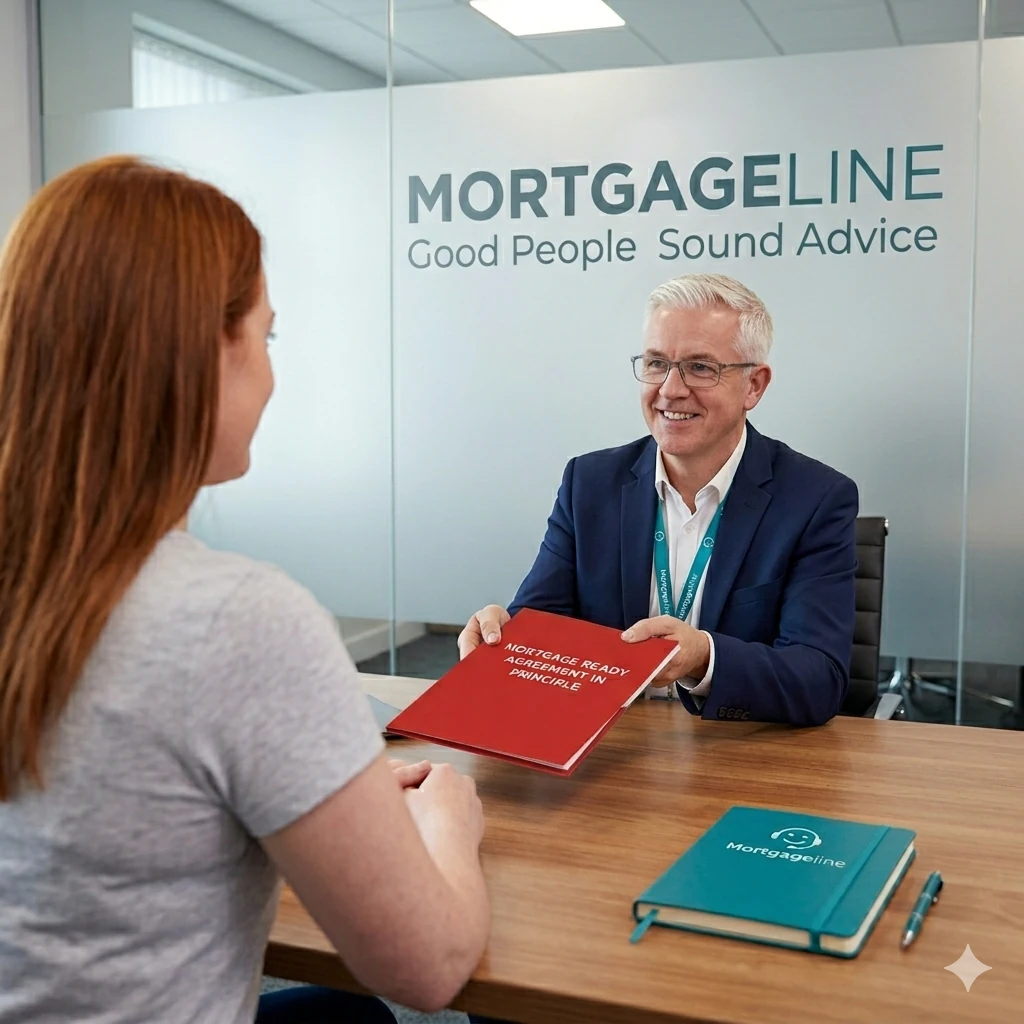
When people talk about getting a mortgage in Ireland, what they usually mean first is getting an Approval in Principle, or AIP.
AIP is a conditional indication of how much you may be able to borrow. Its validity varies by lender, but it is commonly valid for around 6 to 12 months. A basic AIP is often automated and based on headline numbers. A fully underwritten AIP is stronger because an underwriter has reviewed your documents in detail. That can make your offer look more credible to estate agents and sellers, while also giving you a clearer price range.
Approval In Principle Steps
- Review your income, deposit, spending, and borrowing power.
- Compare lender options and policy differences.
- Submit through a broker or directly to a lender.
- Provide supporting documents for review.
- Receive borrowing confirmation aligned with Central Bank limits.
- Check the expiry date, because AIP validity depends on lender policy.
Required Mortgage Documents Ireland
Most lenders in Ireland will want:
- Proof of ID
- Proof of address
- 6 months current account statements
- 6 months savings statements
- Employment Details Summary
- Salary Certificate
- Recent payslips
- Loan or credit card statements
If you are self-employed, expect extra paperwork such as accounts, tax documents and Revenue records. For that reason, it helps to understand lender expectations around a Self Employed Mortgage well in advance. Lenders pay close attention to your most recent six months of financial behaviour, so now is not the time for mystery Revolut transfers or heroic late-night Klarna adventures.
Start Strategic House Hunting
Once your AIP is in place, house hunting becomes much more focused. In 2026, buyers in Ireland are still dealing with affordability pressure, strong competition, low housing stock for sale, and particularly high demand for new builds linked to support schemes. BER ratings also matter more than ever, because a more energy-efficient home may improve affordability over time and can open access to green mortgage pricing.
Keep your search aligned with your real budget, not your optimistic budget.
First Time Buyer Schemes 2026
Government supports remain a major part of how to get a mortgage in Ireland for many first-time buyers.
The Help to Buy Scheme can provide up to €30,000 or 10% of the property price, subject to eligibility. It applies to qualifying new builds and self-builds, has a €500,000 property price cap, requires a minimum 70% loan-to-value mortgage, and has been extended to 31 December 2029.
The First Home Scheme can provide up to 30% shared equity, or 20% if you are also using Help to Buy. The minimum equity share is 2.5% of the purchase price or €10,000, whichever is higher. There is no service charge for the first five years, with service charges applying from year 6 if the equity share has not been redeemed.
Other supports worth checking include the Local Authority Home Loan, which is a government-backed mortgage for eligible buyers on modest incomes, and the Local Authority Affordable Purchase Scheme, where homes may be offered at discounts that can be up to 40% below market value in some schemes.
Ireland Housing Market Reality in 2025
The market context matters because it shapes what “affordable” looks like in real life.
CSO data showed the national median dwelling price was €380,000 in the 12 months to September 2025. In Dublin, the median was €495,000. Residential property prices were up 7.6% nationally, with Dublin up 5.3% and prices outside Dublin up 9.4%.
Supply remains tight. MyHome reported roughly 13,000 listings at the end of Q3 2025, while CSO data later showed 36,284 dwelling completions in 2025, the highest annual total in that series to date. First-time buyer approvals were also strong, with BPFI reporting 15,736 approvals in H1 2025.
The takeaway is simple. The market is still competitive, but buyers are not walking into it blind. Good preparation, realistic budgets and scheme awareness matter more than ever.
Research Mortgage Rates and Apply Online
When it comes to getting a mortgage, rates still vary a lot by lender, loan-to-value band, and property energy rating. Official and lender data show that green and lower-LTV products can be priced more sharply, while broader market rates are still materially higher, depending on the product. ECB data showed average new mortgage rates around 3.3% to 3.4% in late 2025 and early 2026, while current lender pricing shows green products around the low-3% range in some cases. Green mortgages in Ireland commonly require a BER of B3 or better.
Compare fixed and variable options carefully. A broker can also help you understand lender differences and the benefits of using a mortgage broker when rates, criteria and cashback offers do not line up neatly.
When you are ready, you can Apply Online for a mortgage and start the formal process.
Make Offer and Loan Offer
Once you go sale agreed, the pace changes. Your lender will usually require a property valuation, your solicitor will begin title checks and contract work, and the lender will move toward issuing the formal loan offer. You will also need mortgage protection (life insurance) in place before drawdown. Timelines vary by lender, solicitor, and property type, so some purchases move neatly while others take a scenic route through paperwork.
Close Sale Mortgage Drawdown
The final stage usually includes contract signing, satisfying loan conditions, arranging life assurance and home insurance, sending the drawdown request, and then getting the keys.
A straightforward purchase can often close in around 6 to 12 weeks from the sale being agreed, although delays are common and depend on the property and the parties involved.
Consider Future Home Maintenance Costs
Upfront buying costs are one thing. Ongoing ownership costs are another.
Once you own the home, budget for repairs, maintenance, upgrades, and the odd surprise that appears the week after you thought everything was finally sorted. A sensible maintenance fund helps protect both your finances and the long-term value of your home.
Mortgage Ready Checklist 2026
Before you start bidding, make sure you can tick these off:
- Borrowing power confirmed under Central Bank rules
- Deposit saved
- Repayment capacity visible in your accounts
- Upfront buying costs budgeted
- AIP secured
- Schemes reviewed for eligibility
- Documents prepared and up to date
- Search price range aligned to your actual approval
How MortgageLine Can Help
Knowing how to get mortgage ready is one thing. Doing it efficiently is another.
MortgageLine can help you compare lenders, understand scheme eligibility, prepare documents properly, and secure a stronger Approval in Principle. That is especially valuable in Ireland, where lender policies can differ more than many buyers expect. Early broker guidance can make the whole journey feel more manageable and far less like trying to assemble flat-pack furniture without the instructions.
Ready To Buy Your First Home
If you want to know how to get a mortgage in Ireland in 2026, the winning formula is still the same: understand the borrowing rules, build your deposit, clean up your accounts, review the schemes, and get approval early.
The 2026 market offers real opportunities for prepared buyers. Rates are steadier than they were, supports remain important, and first-time buyers are still active. The earlier you start, the stronger your position will be.
Contact us today for a free mortgage review call. Speak to a broker, get a borrowing estimate, and start your home buying journey with confidence.
Frequently Asked Questions (FAQs)
How much deposit do first-time buyers need in Ireland?
Most first-time buyers need a minimum 10% deposit. You should also budget extra for solicitor fees, valuation, survey, and insurance costs, which can be another 2 to 3% on top of your 10% deposit.
How much can I borrow mortgage Ireland?
First-time buyers can typically borrow up to four times their gross annual income. You might qualify for a higher mortgage with an exception. However, exception approval is at the lenders discretion and depends on affordability, employment stability, and credit history.
How long does mortgage approval take Ireland?
Approval in Principle can take a few days to a few weeks depending on documentation and lender processing times. A formal loan offer can issue quickly (3 to 5 days) once you go sale agreed and the mortgage valuation is completed and with the lender.
What is Approval in Principle mortgage Ireland?
Approval in Principle is a conditional lender assessment showing how much you may be able to borrow. It helps set your budget and shows sellers you are a serious buyer.
Can I use Help to Buy and First Home?
Yes, many buyers use both schemes together. Help to Buy supports your deposit, while the First Home Scheme provides shared equity to bridge affordability gaps on eligible new-build properties.
What costs should I budget beyond deposit?
Budget for stamp duty, solicitor fees, valuation, survey, insurance, and moving costs. These upfront expenses can add several thousand euro and should be planned before applying for a mortgage.