

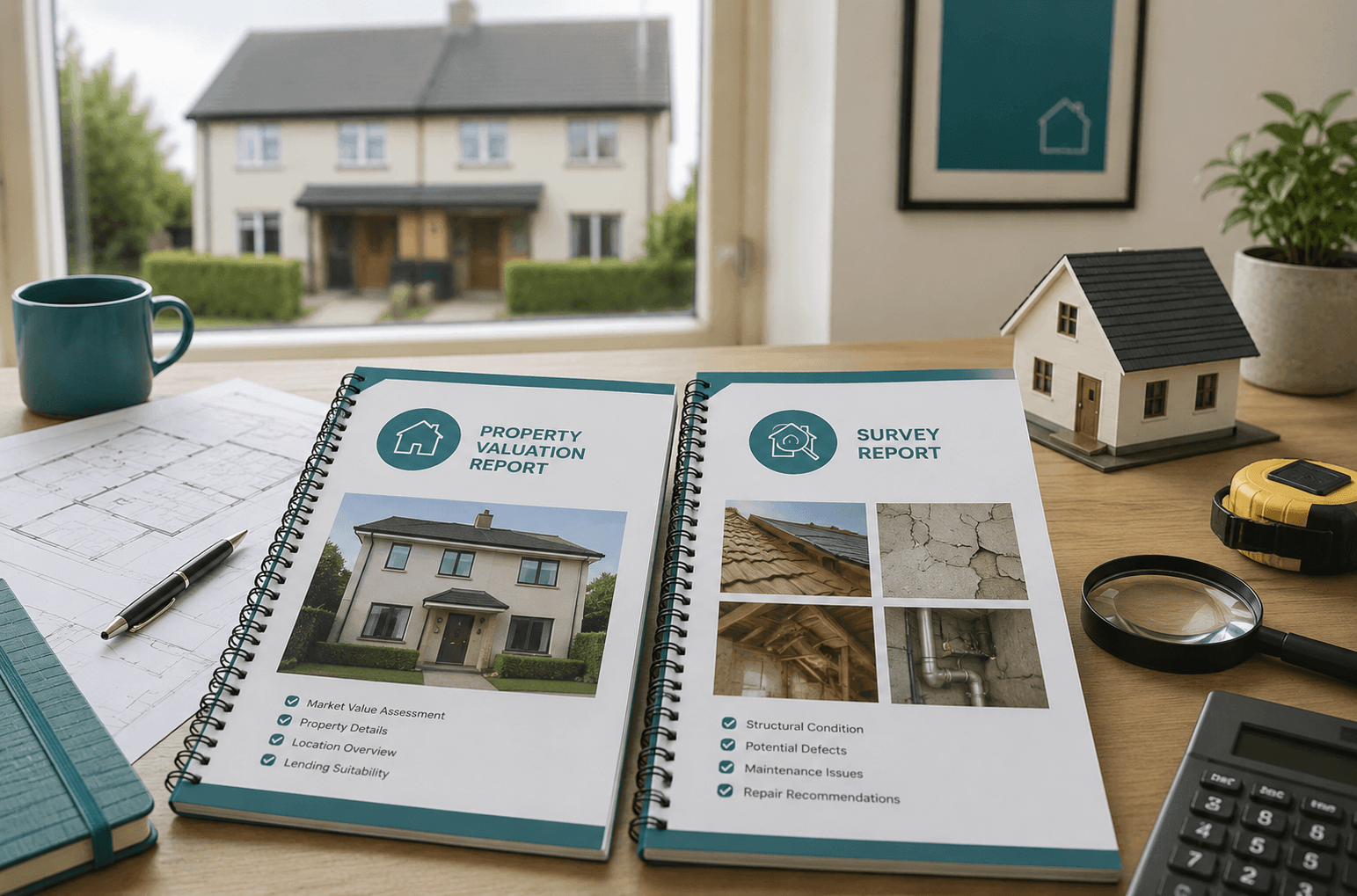
Buying a home involves plenty of paperwork, but two reports often cause confusion for Irish buyers: the property valuation and the survey report. The good news is that they’re actually quite easy to tell apart once you know their purpose.
In simple terms, one is a basic report that tells you and the lender what the property is worth, while the other tells you what condition it’s in, structurally. Understanding the difference can save you money, help you avoid costly surprises, and give you greater confidence as you move towards homeownership.
Key Takeaways
- A property valuation assesses what the home is worth for the mortgage lender.
- A survey examines the property’s structural condition and identifies defects.
- Most lenders require a valuation before issuing a mortgage offer.
- A survey is usually optional but highly recommended for second-hand homes.
- Valuations typically cost between €150 and €300.
- Surveys generally cost between €400 and €1,200 plus VAT.
- Older properties may require a structural survey as a condition of mortgage approval.
- Survey findings can help buyers renegotiate the purchase price before contracts are signed.
The Key Difference Explained
The difference between valuation and survey is straightforward once you understand who each report is for. Here’s the two side by side:
| Valuation | Survey | |
|---|---|---|
| Who it’s for | The mortgage lender | You, the buyer |
| Main question | “What is the property worth?” | “What condition is it in?” |
| What it covers | Market value, location and suitability as security | Structure, defects, damp, roof, services and more |
| Rough cost | €150-€300 | €400-€1,200 plus VAT |
| Required? | Yes, most lenders insist on it | Optional, but recommended for second-hand homes |
A valuation is primarily for the lender. It confirms that the property is worth at least the amount being paid and provides reassurance that the home offers sufficient security for the mortgage.
A survey, on the other hand, is for you, the buyer. It investigates the property’s condition, highlights defects, and identifies any issues that may require costly repairs.
Both reports serve different purposes, and one should never be viewed as a substitute for the other.
What a Mortgage Valuation Is
A mortgage valuation is a relatively brief inspection carried out on behalf of the lender.
The valuer’s role is to determine the property’s current market value and confirm that it provides suitable security for the proposed loan.
The resulting valuation report for mortgage purposes typically includes:
- Estimated market value
- Property description
- Location assessment
- General observations
- Confirmation of suitability for lending
Importantly, a valuation is not designed to identify structural defects or maintenance problems.Many buyers assume the valuer will point out issues such as dampness, roof problems, or subsidence. In reality, this is not the purpose of the report.
In Ireland, mortgage valuations typically cost around €200, although fees generally range between €150 and €300 depending on the lender and property type.
What a Survey Report Is
A survey is a much more detailed inspection of the property itself.
A qualified surveyor or engineer examines the home’s structure and condition to identify defects, maintenance issues, or potential future risks.
A typical house survey Ireland report may assess:
- Roof condition
- Walls and foundations
- Damp and water ingress
- Insulation
- Windows and doors
- Structural movement
- Plumbing and drainage
- Electrical concerns
- Evidence of previous repairs
Unlike a valuation, the survey is specifically designed to protect the buyer before they become legally committed to the purchase.For many buyers, especially those purchasing older properties, a structural survey Ireland report provides valuable peace of mind.
Comparing the Costs
One of the most noticeable differences between the two reports is cost. Here’s how the three inspections a buyer might arrange compare:
| Report | Typical cost | Timing | When you need it |
|---|---|---|---|
| Mortgage valuation | €150-€300 | A few days | Required by most lenders |
| Survey report | €400-€1,200 + VAT | A few days, with a written report | Recommended for second-hand homes |
| Snagging inspection | ~€300 (up to €600) | A few days | New-build homes |
The structural survey cost Ireland buyers pay can vary considerably depending on whether the survey is a basic pre-purchase inspection or a comprehensive structural assessment.
When budgeting for a home purchase, don’t forget to factor in these expenses alongside the hidden costs of buying a home.
Do You Need Both?
In most cases, yes.
The valuation is usually mandatory because the lender requires it before issuing a mortgage offer.
The survey is generally optional, but it is strongly recommended when buying a second-hand property.
A survey becomes particularly important when:
- The property is older
- The property has been vacant for a long period
- Visible signs of deterioration exist
- Renovations or extensions have been completed
Mortgage lenders may insist on a structural survey where:
- The property is over 100 years old
- The valuer identifies obvious concerns
- Structural issues are suspected
In these situations, the lender may also request repair estimates and confirmation that sufficient funds remain available to complete any necessary works.
Surveys for New Builds
New-build homes are slightly different.
Because most new developments in Ireland come with a ten-year structural guarantee, many buyers choose a snagging inspection rather than a full structural survey.
A snag list inspection typically costs around €300 and focuses on:
- Cosmetic defects
- Poor workmanship
- Incomplete finishes
- Minor construction issues
Common findings include:
- Paint defects
- Poorly fitted doors
- Cracked tiles
- Incomplete sealants
- Faulty fixtures
For most buyers, a snagging inspection provides sufficient reassurance without the expense of a full structural survey.
How a Survey Protects Your Offer
One of the biggest benefits of a survey is the negotiating power it can provide.
If defects are discovered before contracts are signed, you may be able to:
- Renegotiate the purchase price
- Request repairs
- Seek specialist reports
- Walk away from the purchase entirely
This can potentially save thousands of euro and prevent unpleasant surprises after moving in.
If you’re progressing through the mortgage process, our guide to the next steps after mortgage approval can help you understand what comes next.And if you’re already a homeowner and planning your next move, our moving home mortgage advice Ireland guide is worth exploring.
How MortgageLine Can Help
Understanding valuations, surveys, legal fees, and mortgage requirements can feel overwhelming, particularly for first-time buyers.At MortgageLine, we help clients understand every stage of the buying process, including:
- Mortgage approval requirements
- Property valuations
- Deposit planning
- Survey considerations
- Purchase costs
- Budget preparation
Because we work with Irish buyers every day, we can help you avoid common mistakes and prepare for the costs that often catch people by surprise.Whether you’re purchasing your first home or moving up the property ladder, our team is here to guide you every step of the way.
Ready to Plan Your Home Purchase?
Understanding both the valuation and the survey report helps you make informed decisions and avoid unnecessary risks.While the lender’s valuation protects the bank’s interests, a survey protects yours. Together, they provide a clearer picture of both the property’s value and condition.
At MortgageLine, we can help you understand every cost involved in buying a home and support you throughout the mortgage journey.For more guidance, explore our first-time buyer mortgage advice Ireland page.
Contact MortgageLine today for a free mortgage review call and start your home-buying journey with confidence.
Frequently Asked Questions (FAQs)
Can I use my survey to renegotiate the price?
Yes. In Ireland, survey findings often provide grounds for renegotiation where significant defects or unexpected repair costs are identified before contracts are signed.
Who chooses the valuer, me or the bank?
In most cases, the lender provides a panel of approved valuers and you select one from that list. The valuation is carried out on behalf of the lender.
Is one survey enough for an older house?
Not always. If significant issues are identified, additional specialist inspections may be recommended, such as structural, drainage, electrical, or roofing assessments.
What if the survey finds a serious defect?
You may choose to renegotiate the purchase price, request repairs, obtain further expert advice, or withdraw from the purchase before becoming legally committed.
Does the lender ever ask to see my survey?
Usually no, as surveys are commissioned for the buyer’s benefit. However, if significant structural concerns arise, the lender may request additional reports or documentation before proceeding with the mortgage.